

-5.png)
Tokoname
Tokoname is today inseparably associated with kyusu teapots and tea utensils, yet pottery has been produced here for more than a thousand years. The oldest surviving vessels from this area date back to the early 11th century, during the Heian period. Tokoname is counted among the so-called Six Ancient Kilns of Japan (Rokkōyō, 六古窯), alongside Seto, Echizen, Shigaraki, Tamba, and Bizen.
What distinguishes Tokoname from the others is its remarkable ability to transform and adapt to changing times.
History of Tokoname-yaki
The earliest Tokoname ware took the form of large storage jars and vessels, fired in wood-fueled anagama kilns. At that time, Japan had not yet developed the techniques for glazing or decorating ceramics. Unlike the other ancient kiln sites, which quickly embraced new forms and styles that emerged with the rise of the tea ceremony, Tokoname remained largely faithful to these archaic forms for a long period—right up until the end of the Edo period.
A major turning point came with the spread of sencha, inspired by the Chinese style of drinking loose-leaf tea. Japanese potters began to imitate the shapes and aesthetics of Chinese teapots. In 1878, a master potter from Yixing in China was invited to Tokoname to pass on his knowledge and techniques for making high-quality teapots.
A crucial role was played by the discovery of the local red clay known as shudei, whose color resembled that of older Chinese tea wares. The discovery and popularization of shudei are attributed to Sugiei Jumon. The shift toward producing refined tea utensils fundamentally transformed Tokoname into the form we recognize today.
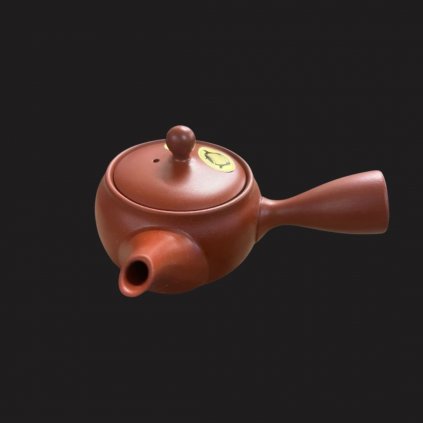
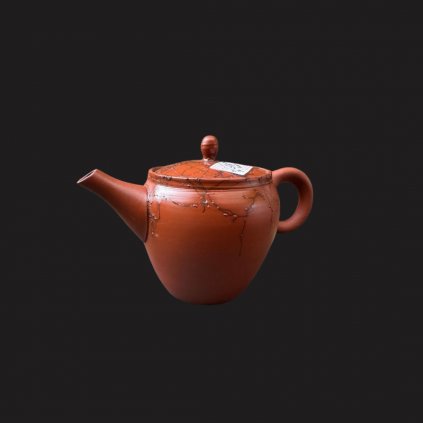
Shudei, literally “vermilion clay,” is the hallmark of modern Tokoname ceramics. It originates from ancient sediments at the bottom of Lake Tōkai, which existed in this region roughly a million years ago. Its rich red color comes from a high iron content, which turns red when fired in an oxidizing atmosphere.
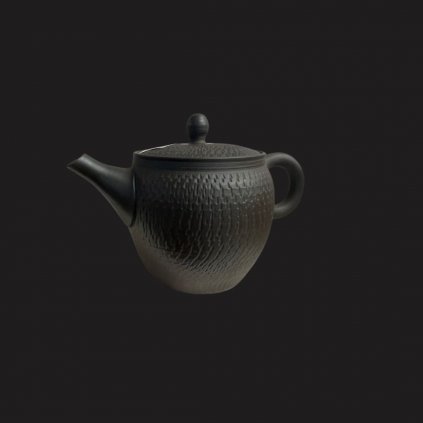
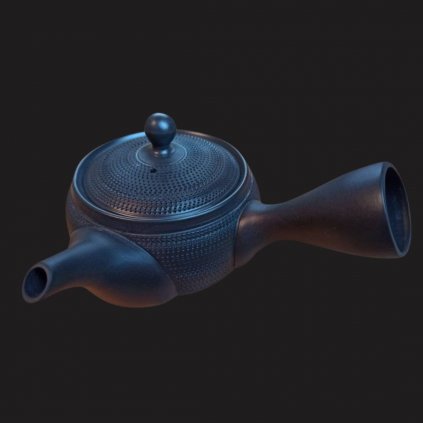
Alongside the classic red shudei teapots, Tokoname has developed a variety of other distinctive styles. Kokudei is black pottery fired in reduction; the chemical reaction of iron combined with soot from the firing process gives the clay its deep black tone.
Another style is ryokudei, a green clay colored with cobalt, often decorated using the mogake technique. In this process, strands of amamo seaweed are draped over the surface of the vessel; during firing, the seaweed burns away, leaving behind a characteristic carbonized pattern on the clay.


Product sorting
Brands
List of products




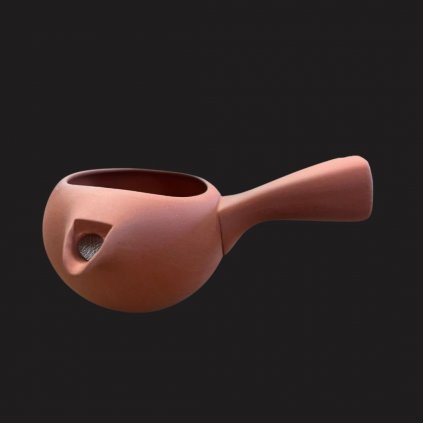
Minimalist modern futanashi teapot with fine stainless steel strainer
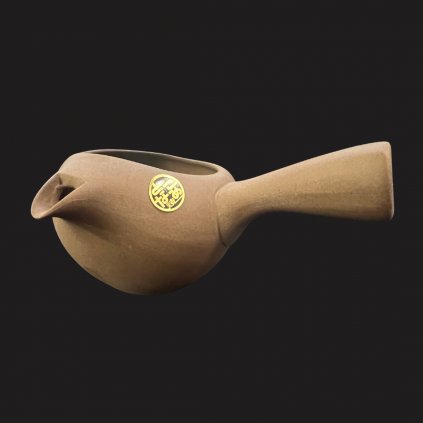
Minimalist modern futanashi teapot with fine stainless steel strainer

Minimalist modern futanashi teapot with fine stainless steel strainer